
3 Skincare Myths You Need to Stop Believing
February 4, 2026
The Do’s and Don’ts of Doing Your Nails
July 8, 2026
The Top 6 Nutrients for Healthy, Glowing Skin and Where to Find Them
Healthy skin starts from within! While products are an important part of your skincare routine, nutrients from the foods you eat can help protect and promote the health of your skin from the inside.
Feeding your body skin-loving nutrients on the regular can do more than just support your overall health. Including foods in your diet that are rich in skin-supporting nutrients can help slow signs of aging, boost moisture and elasticity, and even lower your risk of certain skin conditions.
Basically? What’s on your plate shows up on your face.
Read on to learn about the top 6 nutrients you need for healthy skin, and where to find them.
Nutrition for Your Skin
Your skin is your largest organ, a shield that acts as a protective and sensory boundary between the inside of your body and the world. And while what we interact with outside can impact our skin, what is happening inside our bodies can also affect it. Yep, your skin can reveal nutritional deficiencies.
This is why nutrition is an effective way to improve the health and appearance of your skin.
Here are 6 of the best nutrients to include in your diet for healthier, more youthful skin. Note: All of the nutrients on this list are what are called essential nutrients. This means that although they’re important for survival, growth, and proper function, the body doesn’t make them in sufficient amounts, so you have to get them from your diet. That’s why we’ve included food sources for each of them.
Top 6 Nutrients for Skin Health
1: Vitamin A
While vitamin A, or retinol, has become a popular ingredient in skincare products, it’s equally essential as a nutrient. Vitamin A is crucial for growth, vision, immunity, and cell function.
Vitamin A is an immunomodulator and antioxidant that supports skin repair and maintenance, promoting cell turnover. The body uses it to support the function and integrity of all surface tissues, including skin. It plays a role in anti-aging by protecting the skin against UV radiation, and supporting collagen and elastin synthesis, helping smooth deep wrinkles and even reverse photoaging.
Food Sources of Vitamin A
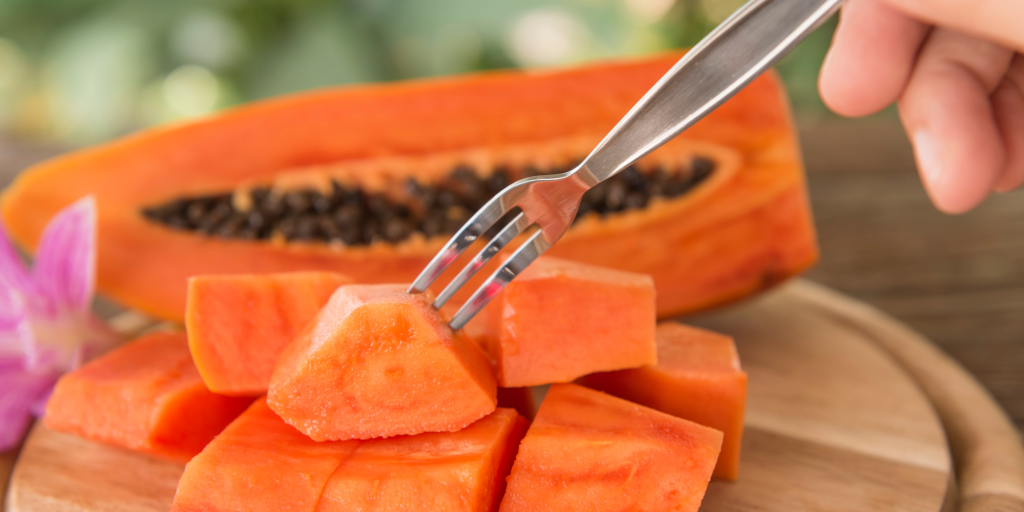
Ace your vitamin A intake by including foods with orange flesh, such as sweet potatoes, carrots, papaya, and cantaloupe. Other foods with vitamin A include liver, fish oils, spinach, eggs, and dairy products in moderation.
2: Vitamin C
Vitamin C is a key nutrient for overall health, but did you know that it’s also crucial for skin health?
Vitamin C is a powerful antioxidant, defending your skin from free radicals. Free radicals are unstable molecules that lead to signs of premature skin aging like dullness, wrinkles, sagging, dark spots, and uneven skin tone. Vitamin C helps slow aging by protecting skin cells from damage like oxidative stress and photoaging.
Collagen provides our skin’s natural elasticity and structure. Unfortunately, our body’s production of this vital protein declines with age, which leads to sagging and wrinkles. Vitamin C helps improve skin’s elasticity and resilience by supporting collagen synthesis and stimulating collagen production.
Food Sources of Vitamin C
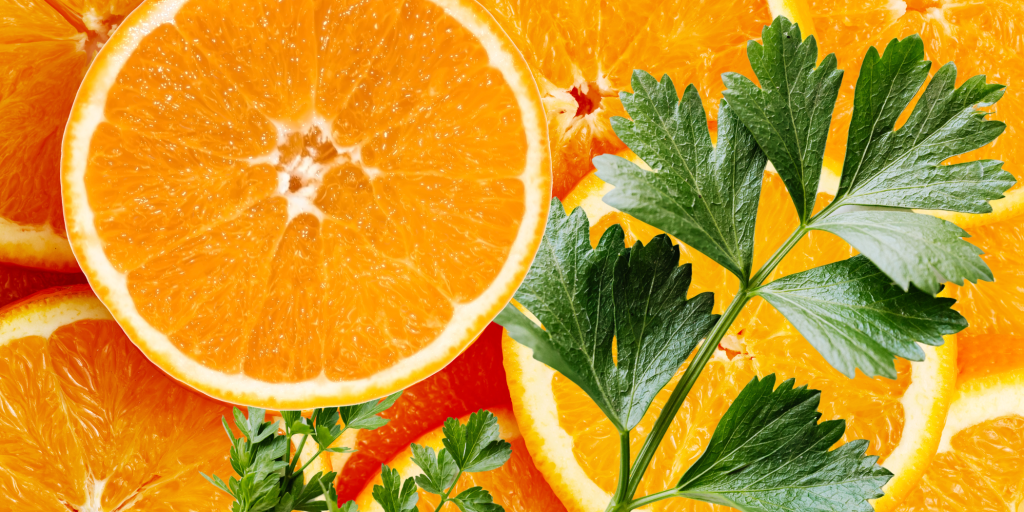
Did you know that parsley is the highest source of vitamin C by far? Other foods that’ll help you get your daily dose are tomatoes, citrus fruits, strawberries, bell peppers, and cruciferous vegetables like brussel sprouts and broccoli.
3: Vitamin D
Vitamin D, or “the sunshine vitamin”, is a powerhouse that supports our body in so many ways. Vitamin D is crucial for bone health, helps with muscle movement and nerve connections to your brain, supports immune function, and is essential for healthy, glowing skin.
An immunomodulator with potent anti-inflammatory actions, Vitamin D has both anti-aging and photoprotective effects. It calms inflammation, protects the skin, supports the skin barrier, and improves cell turnover.
Food Sources of Vitamin D
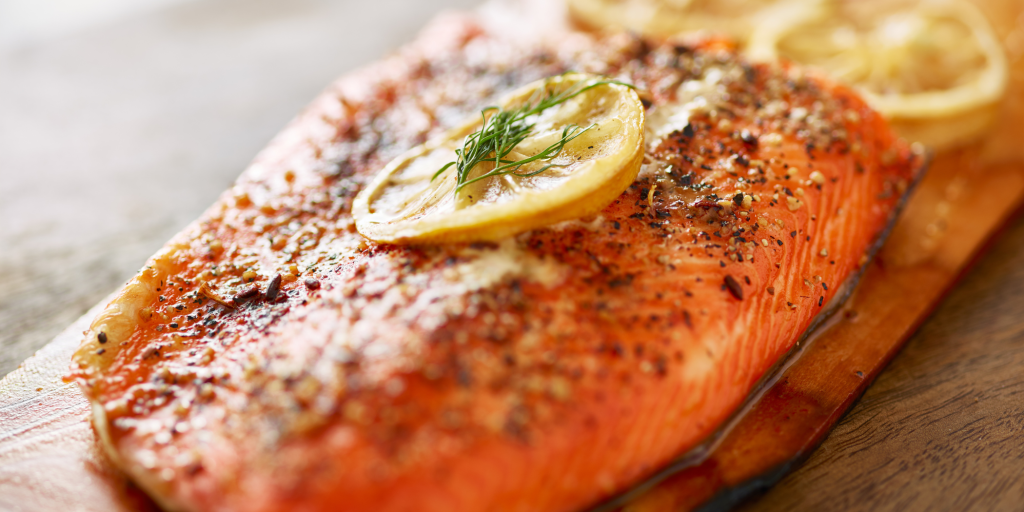
Food sources of vitamin D aren’t plentiful, which is why many people turn to supplements for this essential nutrient. That said, the best food sources are fatty fish like mackerel, tuna, and salmon, fish liver oil, egg yolks, and beef liver.
4: Omega Fatty Acids
Omegas are essential polyunsaturated fatty acids (PUFAs). Omega-3 and omega-6 are skin superstars, contributing to skin barrier function, keeping skin hydrated, and reducing inflammation.
Omega-3s are your skin’s best friend when it comes to reducing inflammation. This is why they’re often supplemented in people suffering from inflammatory skin conditions like psoriasis. When it comes to helping your skin look plump and youthful, omega-3 has been shown to improve hydration by decreasing water loss through the skin, reduce UV-induced damage, and protect against photoaging.
Supplementing with fish oil, a popular source of (PUFAs), has been shown to significantly increase skin hydration.
Omega-6s are also anti-inflammatory, and have been shown to support the structural integrity and barrier function of the skin.
Food Sources of Omega Fatty Acids
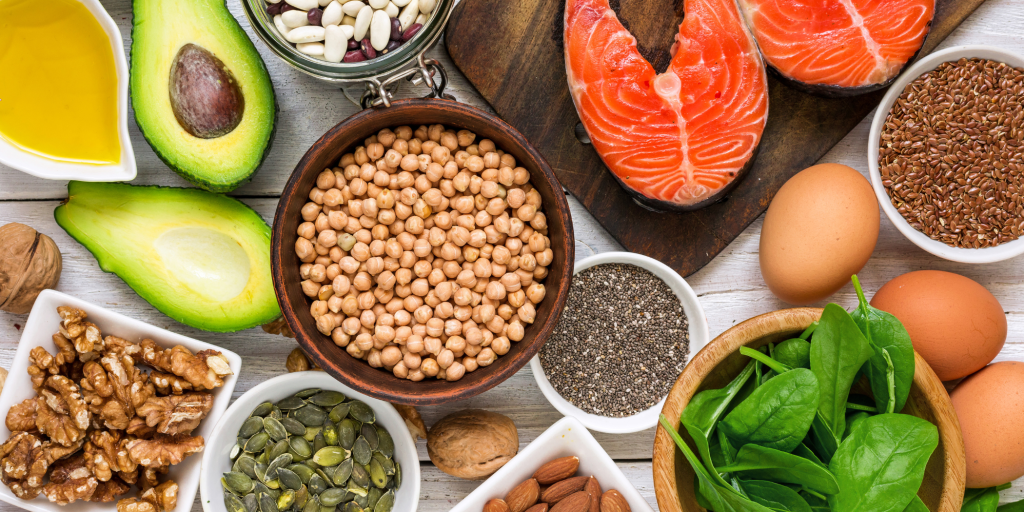
Eat your omegas! Add food sources of PUFAs in your diet such as fatty fish and fish oils, seed sources including flax, hemp, and chia seeds, and walnuts and almonds.
5: Selenium
The nutrient for all things beauty that you’ve probably never heard of, selenium is a trace mineral that helps promote healthy skin, hair, and nails.
This anti-aging antioxidant protects skin against oxidative stress. It reduces inflammation and has been shown to reduce the occurrence of wrinkles and aging-related health conditions like neurodegeneration, cardiovascular disease, and immune issues.
Food Sources of Selenium

Get more of this trace mineral in your diet by incorporating foods with selenium. Brazil nuts are very high in selenium. A few of the other foods that contain it include sunflower seeds, seafood, meats, shiitake mushrooms, and broccoli.
Note: It is possible to have too much of a good thing! When enjoying selenium-rich foods regularly, stick within the recommended limits.
6: Zinc
Last but not least we have zinc. This trace mineral is essential for a variety of functions in your body, including your immune system, smell and taste, and the production of several hormones.
When it comes to skin, zinc is both an antioxidant and anti-inflammatory. It helps protect skin against oxidative damage and supports wound healing.
Zinc is also used therapeutically to treat a wide range of skin conditions.
Food Sources of Zinc
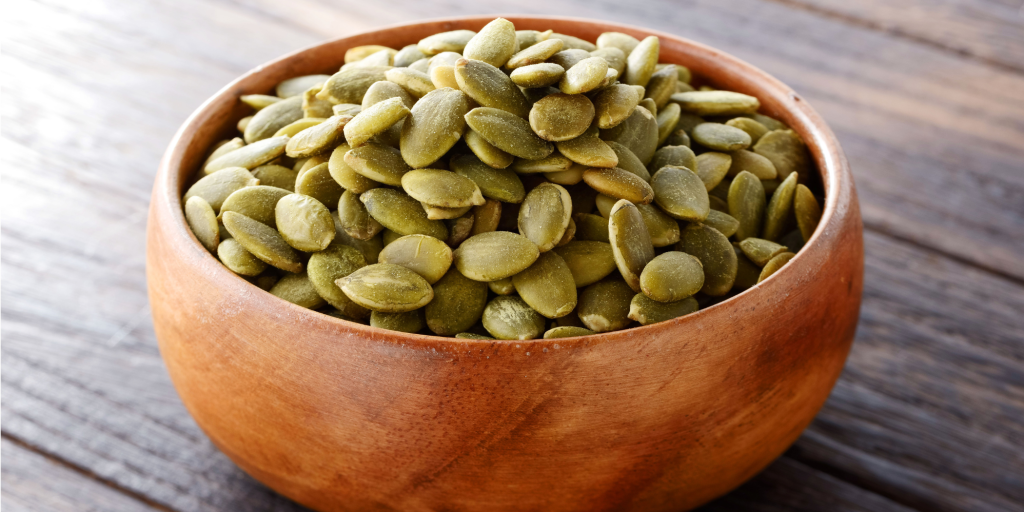
Get more skin-supporting zinc in your diet with foods such as pumpkin seeds, seafood (oysters, crab, and lobster are good sources), meat, eggs, and dairy products. Although there are other plant-based foods like beans, nuts, and whole grains that also contain zinc, the bioavailability of these tends to be lower.
Bonus: Water
Sure, water isn’t a nutrient per se, but “drink water for healthy skin” is an axiom that bears repeating.
Staying hydrated is absolutely essential for skin health, keeping you moisturized from the inside out.
Sources of Hydration

The recommendation is a minimum of 2.5 litres of water every day. In addition to water, consuming fluids like herbal teas, coconut water, and even soups can help you stay hydrated and glowing.
Takeaway
Making nutrient-rich foods that nourish and protect your skin part of your regular diet can do more than just support your overall health; it can help keep your skin healthy, hydrated, and resilient.
In this blog we covered 6 of the best nutrients for skin health, but there are many more. The best way to eat for health and beauty is to consume a variety of fresh, nutritious foods. Research has shown that a varied, healthy diet can improve skin’s appearance, delay skin aging, and even reduce skin cancer risks.
The takeaway? Gorgeous skin isn’t just about what you put on it, it’s also about what’s on your plate. Feed your skin from the inside out for a healthier, more luminous complexion!
Want to learn more about the connection between inside and out? Check out our blog The Gut-Skin Connection to learn how the health of your gut and your skin are linked.
Looking for a proven method to improve skin health? Facial acupuncture has been shown to support healthy circulation, boost collagen, and rejuvenate your skin naturally. It goes beyond the surface to address the root causes of skin issues and signs of aging.
**********
Eileen Fauster of Essential Balance is a Registered Acupuncturist and Registered Holistic Nutritionist who specializes in skin care. Eileen helps clients by using the Vienna Mei Ren non-surgical acupuncture facelift, which combines the best acupuncture needles and techniques with a beautifying skin rejuvenation regime.
* Resources:
Angelo, G. (2012, February). Essential fatty acids and skin health. Oregon State University: Linus Pauling Institute Micronutrient Information Center. https://lpi.oregonstate.edu/mic/health-disease/skin-health/essential-fatty-acids
Bjørklund, G., Shanaida, M., Lysiuk, R., Antonyak, H., Klishch, I., Shanaida, V., & Peana, M. (2022). Selenium: An antioxidant with a critical role in anti-aging. Molecules, 27(19), 6613. https://doi.org/10.3390/molecules27196613
Bocheva, G., Slominski, R. M., & Slominski, A. T. (2021). The impact of vitamin D on skin aging. International Journal of Molecular Sciences, 22(16), 9097. https://doi.org/10.3390/ijms22169097
Gilbert, C. (2013). What is vitamin A and why do we need it?. PubMed Central. https://pmc.ncbi.nlm.nih.gov/articles/PMC3936685/
Gorman, R. M. (2025, April 7). Zinc: What it does for the body, and the best food sources. Harvard Health. https://www.health.harvard.edu/nutrition/zinc-what-it-does-for-the-body-and-the-best-food-sources
Gupta, M., Mahajan, V. K., Mehta, K. S., & Chauhan, P. S. (2014). Zinc therapy in dermatology: A Review. Dermatology Research and Practice, 2014, 1–11. https://doi.org/10.1155/2014/709152
Huang, T.-H., Wang, P.-W., Yang, S.-C., Chou, W.-L., & Fang, J.-Y. (2018). Cosmetic and therapeutic applications of fish oil’s fatty acids on the skin. Marine Drugs, 16(8), 256. https://doi.org/10.3390/md16080256
Jiang, N., Quan, T., Li, R., Chen, Y., & Gao, T. (2025). Role of nutritional elements in skin homeostasis: A Review. Biomolecules, 15(6), 808. https://doi.org/10.3390/biom15060808
Michalak, M., Pierzak, M., Kręcisz, B., & Suliga, E. (2021). Bioactive compounds for skin health: A Review. Nutrients, 13(1), 203. https://doi.org/10.3390/nu13010203
Mumtaz, S., Ali, S., Tahir, H. M., Kazmi, S. A., Shakir, H. A., Mughal, T. A., Mumtaz, S., Summer, M., & Farooq, M. A. (2021). Aging and its treatment with vitamin C: A comprehensive mechanistic review. Molecular Biology Reports, 48(12), 8141–8153. https://doi.org/10.1007/s11033-021-06781-4
Pilkington, S. M., Watson, R. E., Nicolaou, A., & Rhodes, L. E. (2011). Omega‐3 polyunsaturated fatty acids: Photoprotective macronutrients. Experimental Dermatology, 20(7), 537–543. https://doi.org/10.1111/j.1600-0625.2011.01294.x
Purba, M. br, Kouris-Blazos, A., Wattanapenpaiboon, N., Lukito, W., Rothenberg, E. M., Steen, B. C., & Wahlqvist, M. L. (2001). Skin wrinkling: Can food make a difference? Journal of the American College of Nutrition, 20(1), 71–80. https://doi.org/10.1080/07315724.2001.10719017
Sawada, Y., Saito-Sasaki, N., & Nakamura, M. (2021). Omega 3 fatty acid and skin diseases. Frontiers in Immunology, 11. https://doi.org/10.3389/fimmu.2020.623052
Skin. National Geographic. (2017, January 18). https://www.nationalgeographic.com/science/article/skin-1
Tranchida, N., Molinari, F., Franco, G. A., Cordaro, M., & Di Paola, R. (2025a). Potential role of dietary antioxidants during skin aging. Food Science and Nutrition, 13(5). https://doi.org/10.1002/fsn3.70231
Tranchida, N., Molinari, F., Franco, G. A., Cordaro, M., & Di Paola, R. (2025b). Potential role of dietary antioxidants during skin aging. Food Science & Nutrition, 13(5). https://doi.org/10.1002/fsn3.70231
U.S. Department of Health and Human Services. (2025, June 18). Selenium: Fact Sheet for Consumers. National Institutes of Health Office of Dietary Supplements. https://ods.od.nih.gov/factsheets/Selenium-Consumer/
U.S. Department of Health and Human Services. (2026, January 6). Zinc: Fact Sheet for Consumers. National Institutes of Health Office of Dietary Supplements. https://ods.od.nih.gov/factsheets/Zinc-HealthProfessional/